Showing posts with label the home. Show all posts

Tuesday, 11 September 2012

Parcel


 There are not many books where I look forward to their release date but I always check the shelves of Waterstones to see if any new translation of Tove Jansson's has been published. She is one of my favourite written-word companions and I miss her original and homely voice between books. In my virtual book world of teachers and she is one of the most important, alongside Ruskin and Proust.

 'Art in Nature' is a collection of short stories. originally titled 'Dollhouse' in Swedish. 'Art in Nature' proposes a simple idea. Why not pin a parcel to your wall instead of a painting? Then the mystery of the contents and your imagination can be the work of art.

 A caretaker of a summer exhibition stubbles across a middle-aged couple who are unwittingly trespassing in the grounds of his gallery, grilling sausages by the lake. They are quarrelling over a parcel. Inside is a silk-screen they have just bought but they cannot agree whether it is abstract or not, and if it is, what the subject might be. The caretaker having spent many hours contemplating the exhibition suddenly recalls some conceptual art - picture packages also displayed in the exhibition. He suggests that neither will be disappointed with their purchase if they hang it still fully wrapped onto their wall.

'Maybe you should just imagine what's inside, and then imagine different things...You just need to make the wrapping a little prettier, use more string, you know, fishing line or shoemaker's thread...It's the mystery that's important, somehow very important.'

 Part of the mystery must be that someone else has done the wrapping I feel. Here I have left three items still in their wrappers. Perhaps I will be brave enough to resist opening wrapped art if it comes my way and hang it as it is on our walls.


Thursday, 16 August 2012

Wildflowers


Our little sun-filled garden
When we bought our house the garden was dwarfed by a tall, spindly sycamore tree. At the very top was a snug, young family with chicks. We couldn't begin our time here by evicting the previous occupants and so we waited for the young ones to fledge before removing the tree. Now we have a sun-filled garden and can see through our windows.

 Although the tree had been gone for a couple of months, when we moved in, worryingly, there were almost no weeds growing. I mean, if a dandelion wont grow then what hope do we have. On closer inspection we saw the tidy soil was covered in a thick layer of sawdust from the woodcutting, and under that, years of unwanted stuff - including shoes, jewellery, and many, many broken silver-glass Christmas baubles. Once we had cleared this layer we attempted to dig planting holes only to find that just beneath the soil is a complex labyrinth of tree roots. With stubborn determination we found some soil and squeezed in a rose, veronica, clematis, rosemary, chives, parsley, foxgloves and ten tiny little lavender plants (each a different species). 

 Last weekend we visited these tranquil gardens and almost completely changed what we want the garden to look like. The gardens are set against the backdrop of the River Mersey which changes colour and mood as quickly as a turning kaleidoscope. It was a very still warm day and the pools had become such a haven for dragonflies and damselflies. At one point we saw at least twenty darting across the Japanese pond. I took many many photos, trying to capture one couple of the larger dragonflies. One was red and the other blue. From our point of view they looked exactly like miniature helicopters, although with some advanced manoeuvres we are not yet capable of! 


Butterfly

Cornflowers and the River Mersey

A dragonfly in flight

Dragonfly


Teasels and a hoverfly

Lythrum salicaria (Purple loosestrife)

Thistledown

Poppies and cornflowers

Corn Chamomile, Corn flowers and bees!

All the flowers and plants are native and as such are a haven for the local wildlife and in turn a haven for the local people. Such sympathetic planting is so refreshing and good for the soul! Come spring I know what we will be sowing.

Sunday, 12 August 2012

The Explorer's Daughter

 'my parents had spent our first few months in Greenland wondering why my hair never seemed to grow, until finally they discovered that the Eskimos had been cutting off and keeping my curls as protective amulets.'

 A couple of years ago we were staying with friends who live just about as far North as you can go whilst remaining on the British Mainland. Beyond their small village is a long stretch of empty coast dotted with rocks and lighthouses and then seemingly endless sea and sky. Cosily cosseted from the noisy winds that commonly batter the little settlement, seated by the log fire that provides water and heating for the whole house, my friend pressed a dated-looking book into my hands. It was called 'The Snow People' and written by Marie Herbert, the wife of Arctic explorer Wally Herbert over thirty years ago.

 Ostensibly it is an anthropological study, although not in an academic sense, of the Inughuit people of a small island, called coincidentally Herbert Island, in North Greenland. But in reality it is a far more fascinating story of a mother suddenly finding herself and her ten-month-old baby daughter in a completely alien culture to her own and living in the harshest environment imaginable. Wally's adventures travelling across dangerous and unexplored stretches of Arctic Ice seem straightforward when you read the challenges Marie faces. Their family home for two years is a simple hut measuring in total 14 feet by 11 feet usually intended only for visiting hunters. Kari remembers:

'The walls were dark blue and stained with old blood and grime, the windows were cracked, there was no toilet and an all-pervading smell of seal and walrus and general squalor hung in the air. 'We had to paint it immediately,' Dad told me laughing, 'to seal in the smell.''

None of the Eskimos speak English and so in order to communicate with her new community Kari's mother must first learn Danish and then use the Danish books to learn Greenlandic. The community, of necessity, is close-knit both physically and emotionally. Visitors walk in without warning and the village children are a constant presence, curious and enjoying the interesting supplies of English chocolate. Marie must learn to take care of herself and her young baby without being a burden to the community using traditional methods of survival.

  Their closest neighbours, Avatak and Maria have seven children and a well-worn path between the houses becomes testament to the familial warmth between the families. Kari calls their children her brothers and sisters and Avatak 'Ataata' - which is Greenlandic for 'Dad'. One of the saddest scenes in the book is when Marie, Wally and Kari must go home to England. Maria's outlook on life is so clearly broadened by her friendship with Marie; it is hard to witness the world suddenly become so small and claustrophobic for her again.

 Thirty years later Kari revisited her Arctic family and wrote 'The Explorer's Daughter' about her experiences, and best of all it is a story as engaging as her mother's.

 Kari speaks only Greenlandic on her return from her Arctic home to England at the age of two. Thirty years later she speaks pretty much only English. Alongside the joyful reunions of those who recognise little Kari as the charming little child they had adopted as their own, are many sad revelations as we see the consequences on the Inughuit people of the cultural invasion of the rest of the world. Alcoholism and global warming, which were already making an impact in the 1970s have had a devastating affect. Few families hadn't experienced a least one suicide amongst their younger generation and many of the local traditional hunting grounds are now unreachable due to melted ice.  Shockingly we hear that Maria shot and killed her husband Avatak not long after the Herberts' return to England.

 Kari returns to Herbert Island, which has now been abandoned by the population for the larger settlement of Qaanaaq (Thule). Her hut is almost unrecognisable as her one-time home, save for the shelves lovingly put in by her father:

 'the house was littered with belongings: furs, jackets, boots and provisions. In the main room a tin ashtray was filled with nicotine-yellow butts and rings of coffee stained the plastic tablecloths.'

 The hut has returned to being a temporary shelter for visiting hunters. But her adoptive grandfather's hut is just as he left it:

'Aata's faded armchair sat in the corner with his imprint still on the worn cushions. Naduk squeezed past me a plumped herself down in it happily chewing on a thumbnail. I took a sharp intake of breath in surprise, and realized that she had never known her grandfather. Naduk smiled, oblivious to my thoughts.'


The most important part - the photographs!


Kari's identity is so complex. She is neither English girl nor Inughuit, she never quite feels at home in Greenland and yet so many of the community consider her one of their long-lost children. She is able to see her community through the fresh eyes of an outsider yet know each member as personally as a family member might. The moment I closed the pages of 'The Snow People' and 'The Explorer's Daughter' I missed the people of Thule.

Wednesday, 8 August 2012

The New Haven

I am so looking forward to a time when we can just exist in our home. Since we have moved in we have been surrounded by men, plumbers, electricians, joiners, plasterers, and today three chimney sweeps (that has got to be lucky!). They are omnipresent, not one room has been sacred. Until today. We have a lock! A lock, to be more precise, on our shower room door.


And in our new haven is a shelf. And on that shelf there is a book. 


And in the book there are many smaller worlds to escape into.


Balloons

Since Christmas they have lived with us,
Guileless and clear,
Oval soul-animals,
Taking up half the space,
Moving and rubbing on the silk

Invisible air drifts,
Giving a shriek and pop
When attacked, then scooting to rest, barely trembling.
Yellow cathead, blue fish--------
Such queer moons we live with

Instead of dead furniture!
Straw mats, white walls
And these traveling
Globes of thin air, red, green,
Delighting

The heart like wishes or free
Peacocks blessing
Old ground with a feather
Beaten in starry metals.
Your small

Brother is making
His balloon squeak like a cat.
Seeming to see
A funny pink world he might eat on the other side of it,
He bites,

Then sits
Back, fat jug
Contemplating a world clear as water.
A red
Shred in his little fist.
5 February 1963
Sylvia Plath

Tuesday, 31 July 2012

Clean


We are finally living in our new home. Although it isn't truly functioning like a home quite yet. Every time we need to shower we take a taxi to the other side of town to the home of a relative. The driver invariably asks, 'So what have you planned for tonight then?'. 

 My mother wonders why she can't phone us on the land-line yet. Here is the socket, in a sealed room, waiting for a paint-sprayer to be fixed. 


 Under the sheets are boxes that contain my clothes - those that weren't packed some months ago for what we thought was going to be an eight day camping trip; some food, which I imagine will now be inedible; our calendar with all birthdays noted; a large modular bookcase and many small boxes of paperbacks. Every so often something is missed and we hopelessly note that it must be somewhere within the labyrinth.

 
 Slowly our shower room is taking shape. We spent so much time visualising how we wanted it to be. We shared so many pictures of bathrooms we loved down to the tiniest details such as the way the curtains had been hung; it seems like an old friend even before it has been completed. The room originally was a kitchen and in a truly horrifying state.


 Be glad you cannot smell this picture! One of the labourers who came in to help clear away the old kitchen units had to be excused, the room made him feel so ill. It isn't just the dirt, it is the sadness of the room that it needs to purified of. With clean walls, ceiling and floor, the two large windows will let the sunshine do the rest we hope.


Monday, 23 July 2012

Utopia


I have been reading about inclusive Utopias, ones that are open to all and provide a welcome to those damaged by or lost in modern society, in 'Utopian Dreams' by Tobias Jones; an account of his journey to discover another, better way, of living. Simultaneously, we found ourselves beaten by the wind and rain in the unprecedented storm clouds that have hit the UK of late and camping was no longer a solution. So we choose to spend some time in Centre Parcs in Cumbria.


 This Utopia costs money and perhaps even causes more social ills than it solves, but it was a solution to our personal immediate needs. But I found a lot to admire here and learned a little about how our lives could look if only things were organised a little differently.

 When we arrived at Whinfell we thought we would certainly want to escape the village and had planned trips to Penrith and the beautiful surrounding countryside; however in reality we drove up to the wooden house, unpacked our bags, parked the hire car back at the edge of the park and didn't see it again for five days.

 We marvelled, of course, at the clean and organised kitchen and the en-suite bathrooms after having only a share of showers and an outdoor sink for the past weeks. We then visited the huge glass dome with a swimming pool, flumes, slides and river rapids set within a tropical garden. The place was buzzing with people: children, couples and groups of all ages and many with disabilities. There was so much to do and see. In this paradise alone our son spent nearly five hours a day. He was determined to make the most of every moment.

After all the noise and chaos of the 'village' we retreated to the truly impressive stillness of our temporary home. Centre Parcs has been established long enough for the woodland to dominate again. There are hares bounding past and red squirrels knocking pine cones from the great height of the cosseting green canopy above. Families of ducks play in the most unpromising little puddles. We were situated in a closely built cul-de-sac but it was actually tricky to make out any neighbours from the windows. Cars must be parked away from the houses except on moving day and even the bikes cycle only on the main thoroughfares.


 In the silence and stillness of the house, with the aid of a giant blackboard we planned all our activities.


 There was so much to try. We choose zip-lining (plummeting down a line between trees), ceramic painting, badminton, windsurfing, perhaps the most wonderful was the horse-riding. The stables are set overlooking the surrounding fells.

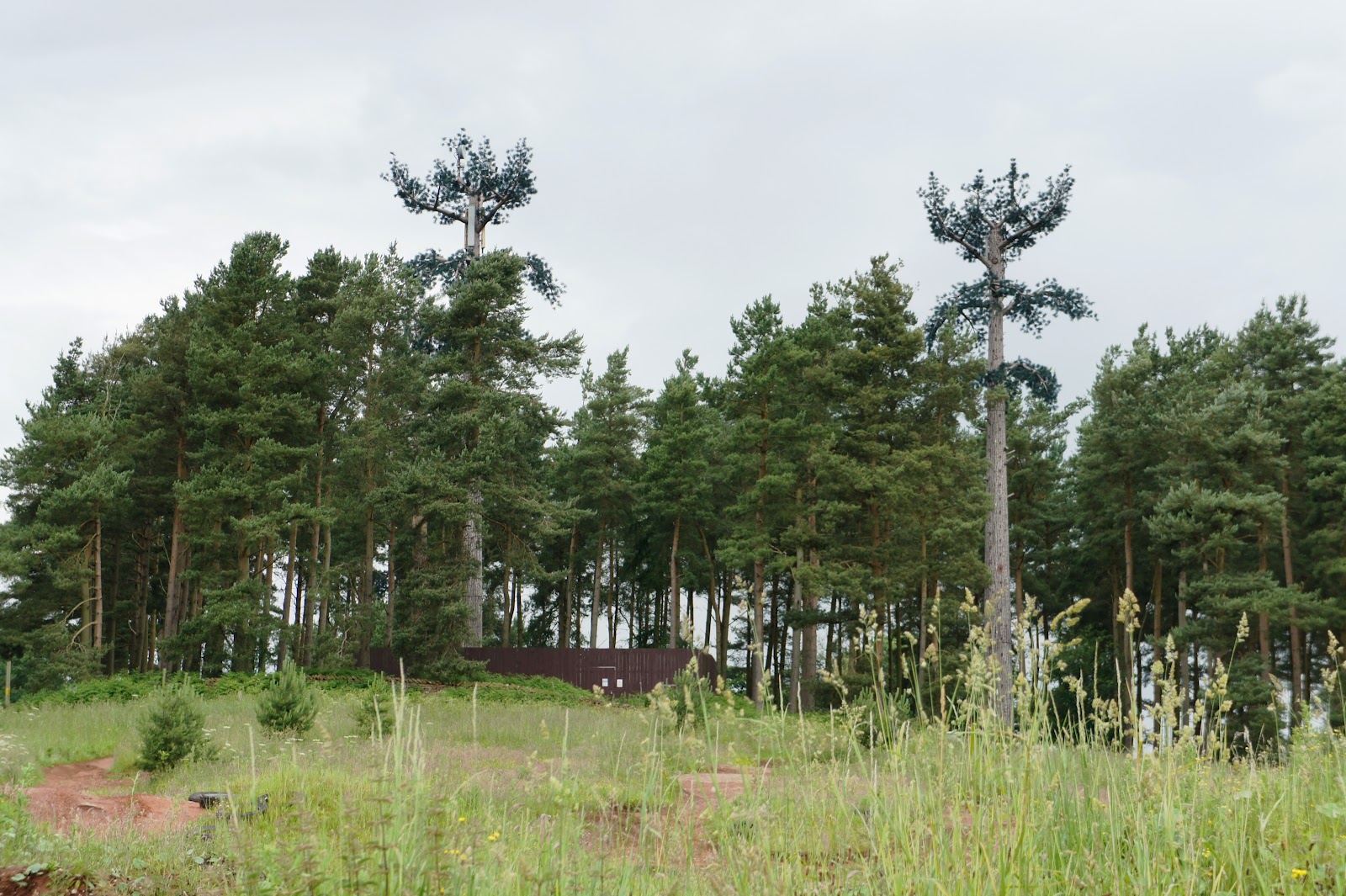
 As with the most sci-fi of Utopias however, even the tress were not quite as they seemed!

 My souvenirs will be fresh ideas: the possibility that a community can hold many people and offer much to occupy them in a small area, yet offer them stillness and a retreat from noise. My other will be this - a huge canvas printed with a large photograph of a tranquil forest. Huge enough to lose oneself in.

Tuesday, 17 July 2012

Moving Day

So, our new home isn't quite ready (well, at all) but our landlord decided he needed his house back, so we have packed our bags and moved to the countryside.

Many places can be called home. If they are warm and dry and are near cooking washing facilities, life can go on.

  Unfortunately for us, there is a huge gloomy black cloud over the UK right now. It is midsummer but the nights are cold, windy and very wet. Home is now our beautiful twenty-year-old bell tent.


 Even in a gale our tent barely flaps. The torrential rain sounds like a Samba band at night but we are dry. One night a rodent chewed its way right through the zip of our suitcase. We wonder what the attraction could be, there is no food in there. Luckily they must have been disappointed because they didn't return.


Our beloved tent is a simple haven giving us the freedom to be wherever we need or wish to be.

Friday, 6 April 2012

Good Friday


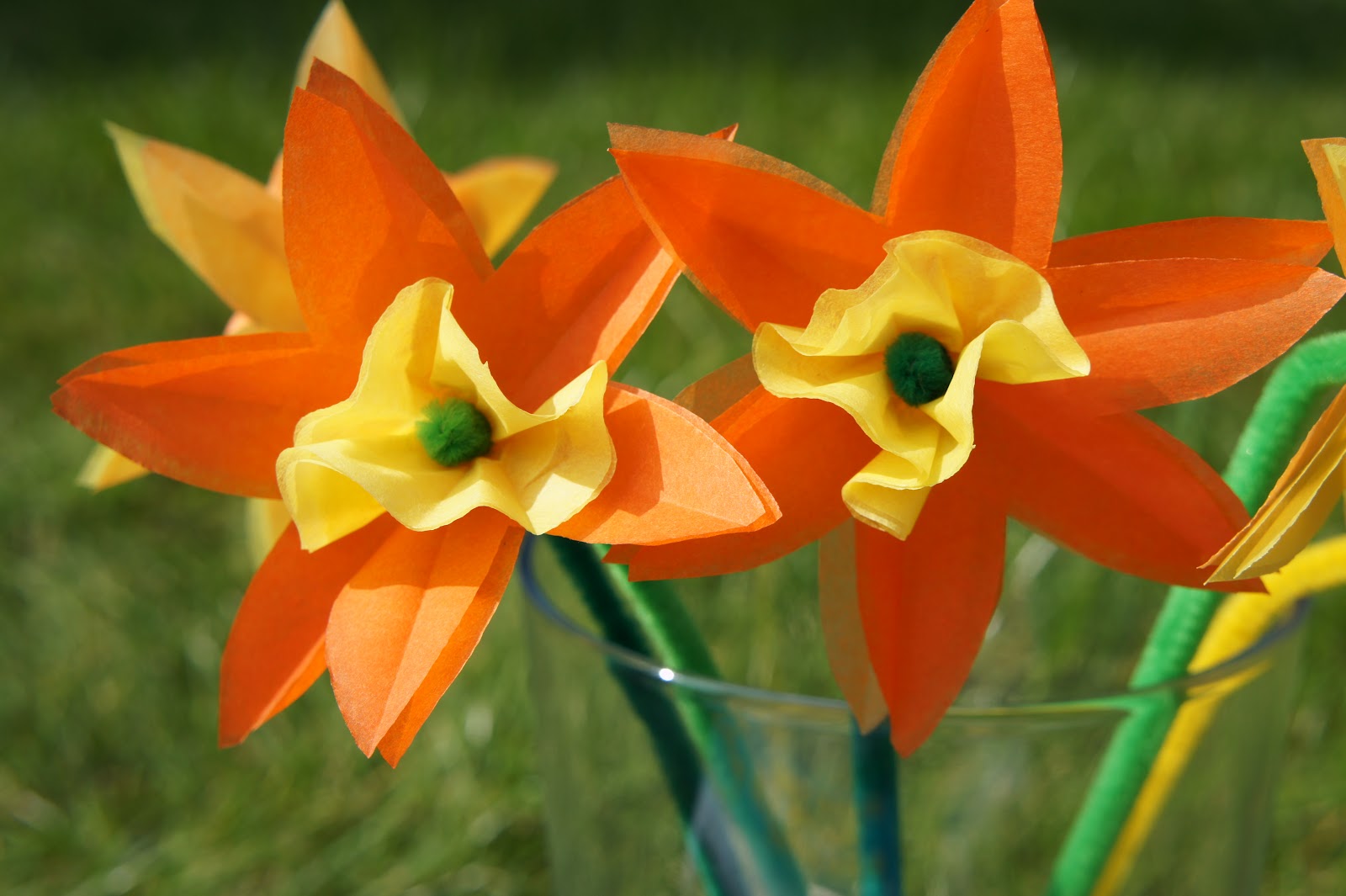
We have set a date for our move for June from this rented house to our new home and things are starting to become a lot more urgent and real. I have already started packing boxes of books, twenty so far; more wool than one girl needs and more chemistry sets than any family should safely own. We are retreating from the chaos to the stillness of the garden and filling the gaps left by our belongings with tissue paper flowers.


Hot Cross Buns

600g of strong white flour
2 teaspoons of mixed spice
400ml of hand-temperature warm milk
10g of yeast (the dried sort you add to water)
2 tablespoon brown sugar
a knob of butter
a handful of sultanas
1 lemon's zest
brown sugar (for glaze)


1. Whisk the milk, yeast and sugar together in a bowl and leave until it begins to bubble.
2. Rub the butter into the flour and spices.
3. Gradually stir the wet ingredients into the flour mixture until you have a sticky dough.
4. Knead the dough for about ten minutes or until soft and elastic. 
5. Knead in the sultanas and lemon zest.
6. Leave to rise until doubled (about an hour).
7. Form into small buns and leave again until doubled.
8. Meanwhile preheat your oven to 200°c.
9. Cut crosses deeply into the buns, being careful not to drag the knife and cause the buns to deflate too much.
10. Bake straight away.
11. Whilst your buns are baking, mix four tablespoons of brown sugar with a little water, just enough to make a thick sugary paint.
12. When your buns are nicely browned take them out the oven and brush them with the sugary paint.
13. Put the buns back in the oven for just less than a minute.
14. Take out and brush with the sugar again. 
15. Leave to cool or serve straight away with butter and jam.

You can also leave the buns to cool and ice the tops with icing sugar (confectioner's/ powder sugar) mixed with lemon juice.

Even the fuchsias are made of tissue paper; we fooled a couple of bees and a brother.

Wednesday, 4 April 2012

So work has begun on the top two floors. This is the destructive stage where all the false walls and stud walls (those added later and only made of wood and plasterboard) get smashed up and removed. Our first layout plans included, on the top and first floors removing the walls between these long thin rooms at the front


and uniting them with their neighbours


to create lovely big rooms with four windows across. One nice big bedroom on the very top floor and one even bigger room on the first floor - completely open plan for the whole floor. But the architect took a look at this wall


and decided it was a load-bearing and masonry. We were quite surprised since it had sounded hollow and anyway why put such a huge window at the end of such a long and narrow room. What could this room have been used for? It was a mystery. Ah well, so we planned how lovely our oddly thin kitchen would look anyway.


Image from Norm architects


We are easy-going folks. It will be great. Lovely, yes.
Today our friend who we have seen do this sort of thing again and again, who has years of hands-on experience and a lot of common sense, a man who we of course asked to manage the whole project for us, removes the false ceiling. He looks above the line of the false ceiling and sees there is nothing at all. He looks at our plans and looks at the huge empty space that he is going to have to 'make good' and gives us a call.
'Are you sure you really want this wall?'
Why did we think it would be masonry?


Tuesday, 20 March 2012

Carrot and Coriander Sunshine Bread

As soon as I bake a loaf of bread in a new place I instantly feel at home. I can't imagine that there is any type of bread that hasn't been tried already in some corner of the World, but the other morning I had the original-to-me idea of adding some grated carrot to my loaf and well, why not, coriander seeds. I often add them to my rye bread anyway. The result was this gloriously fragrant golden loaf.


Carrot and Coriander Bread Recipe

2 carrots
175g strong wholemeal flour
400g strong white flour
2 teaspoons fine sea salt
2 tablespoons coriander seeds
400ml warm water
15g honey
10g yeast (dried or fresh but the kind you add to warm water)
3 tablespoons olive oil

1. Grate your carrot into a food processor.
2. Change your blade to a dough blade and add your flour, salt and coriander seeds to the grated carrots.
3. Whisk your yeast and honey into your warm water. Leave into it begins to bubble.
4. Now switch on your processor and slowly add the olive oil.
5. Follow by slowly adding your yeast mixture until a ball forms. You may need to add more flour at this point until your dough starts to come together in a ball.
6. Run the processor for five minutes or so.
7. To lift the dough out, wet your hands. This will stop it sticking.
8. Leave to rise in a covered mixing bowl for at least an hour.
9. Form into two loaves. Leave for another hour or until doubled in size.
10. Bake for 20 minutes at 220°C , then another 20 minutes at 180°C. Check it is done by tapping it on the base. If it sounds hollow then it is done.
11. Leave to cool at least 15 minutes until slicing (if you like a softer crust then wrap it in a tea towel at this stage).


I hope this brings an early Spring into your home!


Thursday, 8 March 2012


1. Shoot Factory 'House Next Door'

Located here

2. Toast Christmas 2010

3. Shoot Factory 'House Next Door'

4. Toast Christmas 2010

5. Shoot Factory 'House Next Door'

6. Shoot Factory 'House Next Door'

7. Toast Christmas 2010

Lately I have been thinking about the fantasy of homes and the reality, and how a little bit of imagination can bridge the gap.

For some years I have loved the homes presented by Toast. These are peaceful places, often undecorated. I have imagined them as much-loved town houses untouched by the years or elegant and homely country houses, miles from neighbours and protected from the world by their remoteness. I imagined that these town houses were nestled in the centres of picturesque European cities, with impossibly high house prices. But in fact these islands of homely beauty are sometimes in places we wouldn't expect. Places that are partly empty and people have turned their backs on. Places where we might not even expect to find a home.

With the imagination of just a few, the pattern of property ownership can lead from dilapidation to bohemianism and then gentrification. An area becomes empty of people until those with little or no money - aspiring artists, musicians, writers and those who are not afraid to think a little differently - move in. When the herd sees the area full of life once again, they want to buy into this dream for themselves. Of course the prices get higher and higher until the only people who can afford to live there are those focussed on money and the place loses its soul and affordability simultaneously. In fact sometimes the newer affluent residents turn against those who pulled the area out of the doldrums in the first place.

We shouldn't feel afraid to take chances on places. There are many areas of the UK that are virtually empty for no good reason. They are often only streets away from wealthy unreachably expensive areas, yet we don't take advantage of them. Here is a great place to start looking.